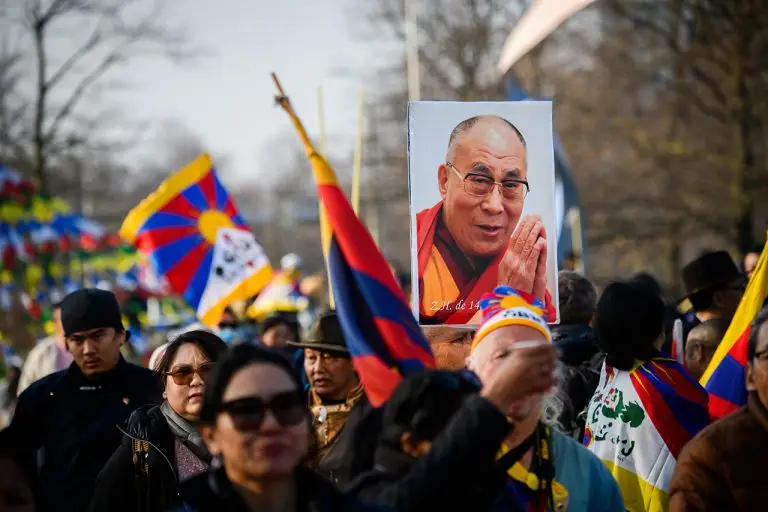
Protest in Brussels on the 67th anniversary of the Tibetan Uprising Day
On Tuesday 10 March, Tibetans and Tibet supporters in Belgium will mark the 67th anniversary of the Tibetan Uprising Day with a protest in Brussels.

February 17, 2026 ・ International Campaign for TibetEvent
On Tuesday 10 March, Tibetans and Tibet supporters in Belgium will mark the 67th anniversary of the Tibetan Uprising Day with a protest in Brussels.

February 13, 2026 ・ International Campaign for TibetNews
The International Campaign for Tibet (ICT) congratulates the Central Tibetan Administration (CTA) and its Central Election Commission (CEC) on successful completion of the first stage of its global elections on 1 February 2026, in a democratic, free and fair process.

February 13, 2026 ・ International Campaign for TibetNews
The Estonian Parliament (Riigikogu) adopted this week a statement condemning China’s system of compulsory boarding schools for Tibetan children and calling for its immediate abolition.

February 12, 2026 ・ International Campaign for TibetNews
Trinley Gyatso, a monk from Kirti Monastery in Ngaba (Ch: Aba), in northeastern Tibet, was released in November 2025 before the completion of his five-year sentence.

February 11, 2026 ・ International Campaign for TibetNews
Anya Sengdra, a prominent Tibetan environmental defender and anti-corruption whistleblower, was released from Mianyang Prison on 7 February 2026. Sengdra’s seven-year sentence ended last year but Chinese authorities arbitrarily extended it by a year before suddenly releasing him last week.

This reports highlights the threats faced by Tibetans in Tibet who celebrate the birthday of their Tibetan spiritual leader the Dalai Lama and urges the international community — including United Nations bodies, national governments, parliaments, and civil society organizations—to call on China to cease its repressive actions.

The People’s Republic of China’s hydropower and dam projects are increasingly leading to massive human rights violations and environmental damage in Tibet. Since Asia’s largest rivers originate in the Tibetan plateau, the construction of hydroelectric dams in Tibet also threaten the water supply, livelihoods and health of up to 1.8 billion people across China, South and Southeast Asia.

This report shows how the Buddhist Association of China (BAC), a supposedly non-political organization, is becoming a key instrument in the Chinese Communist Party’s strategy to assimilate and transform Tibetan Buddhism – particularly in relation to the search for and recognition of reincarnate lamas.
A newsletter providing concise information and perspectives on the political, economic and human rights situation in Tibet